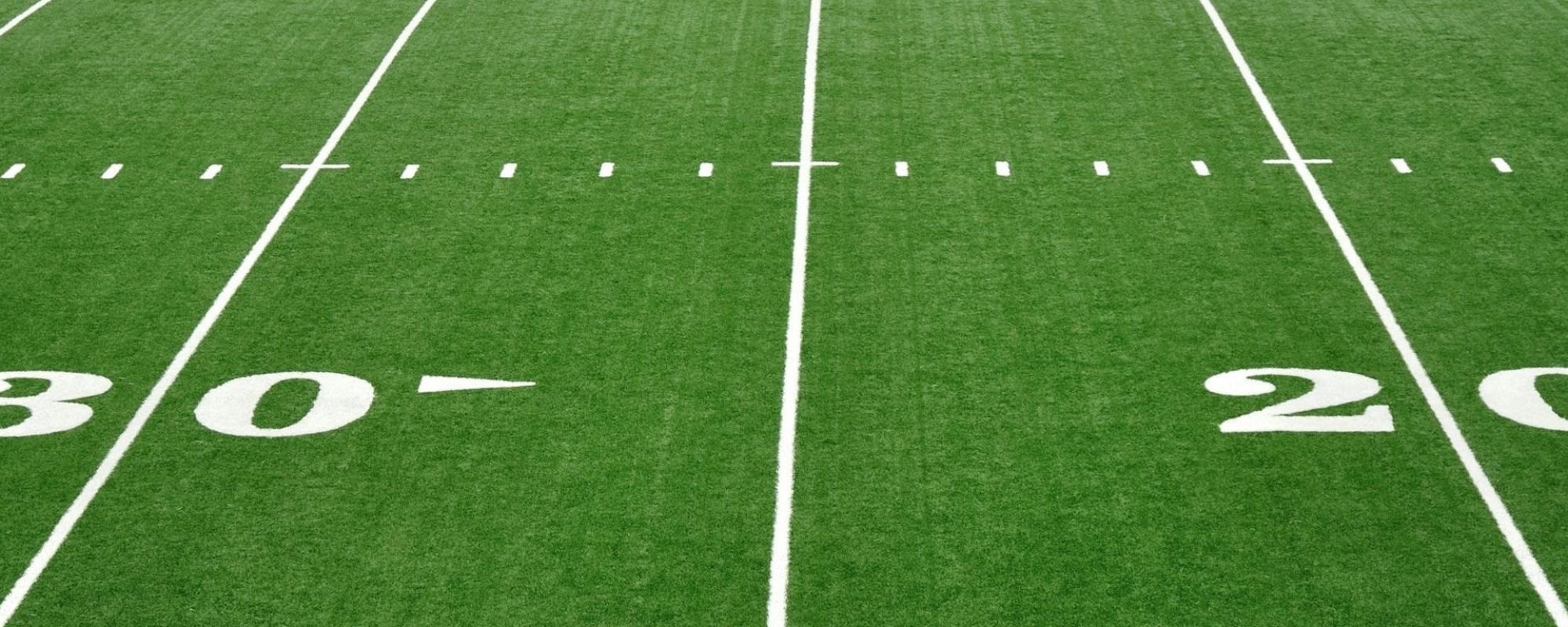
In class today we started listing different important things regarding our sport, football. We broke up our ideas and we all chose something to specifically research.
REBECCA: Equipment / Field Markings
Essential Equipment
- Official-Size Football: Length: 11 inches, Width: 7 inches, Diameter: 21 inches
- Helmet
- Uniform (jersey, pants, padding)
- Mouthguard
- Gloves
Field Markings
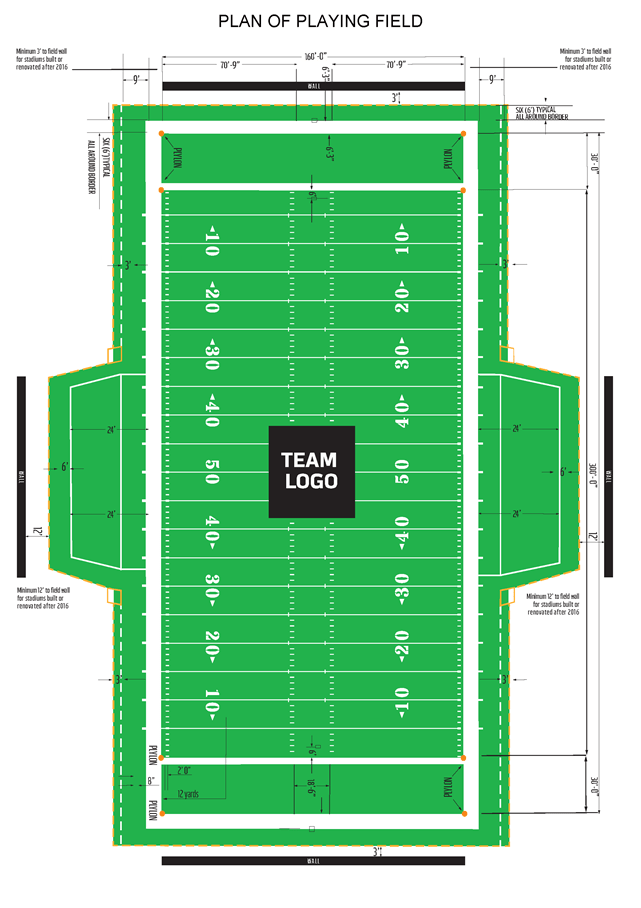
Basic Field Layout with Markings
Field Dimensions
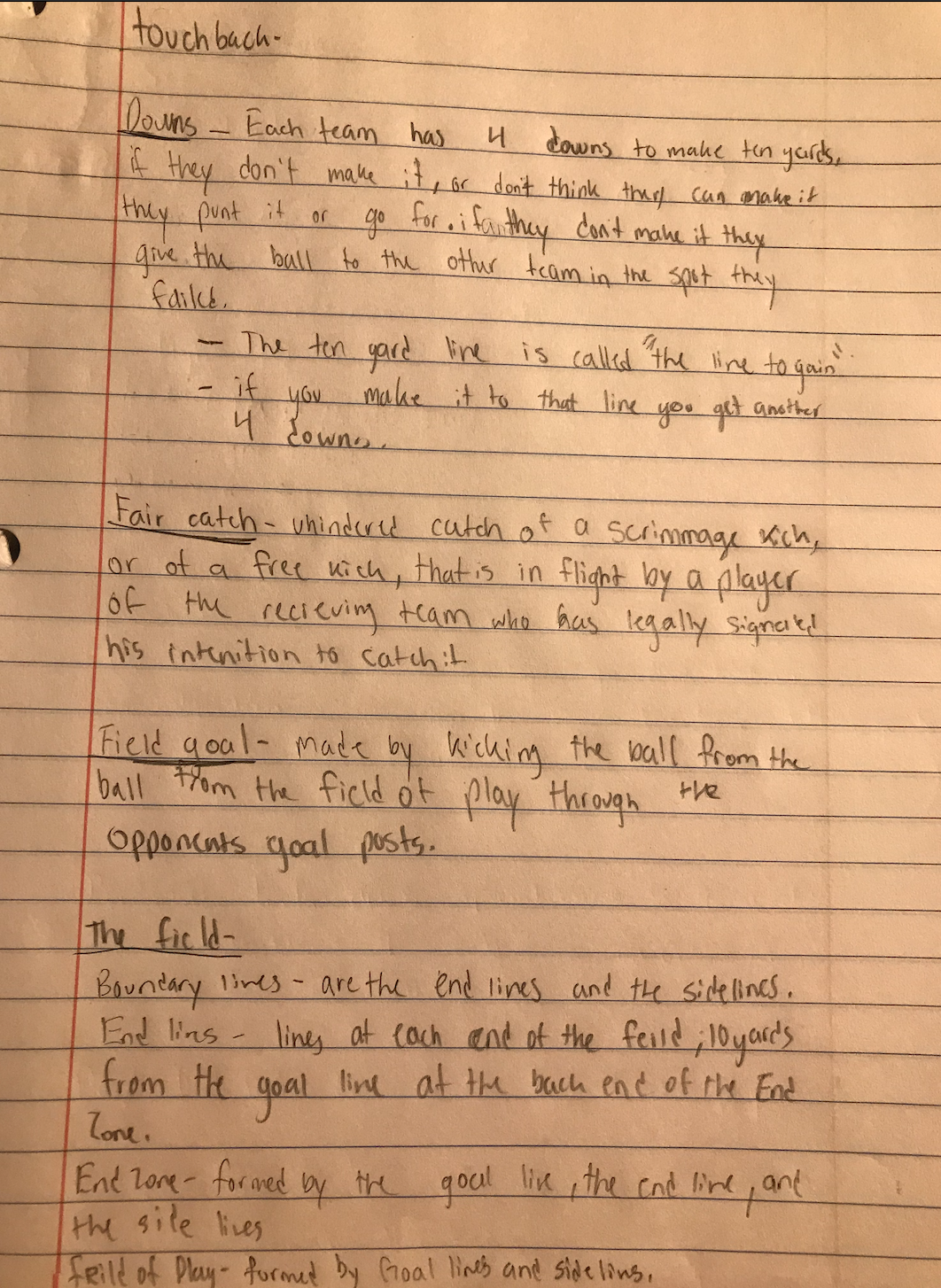
120 total yards long
100 yards long (field of play) plus two 10 yard end zones
53 ⅓ yards wide
Markings
Solid lines every 5 yards. Every 10 yards is marked with a number.
Numbers descend from the central 50 yard line
Each hash is 1 yard apart from the next
Two sets of hash marks (each hash is 1 yard in length) run parallel to each other down the length of the field mark the 1-yard sections between each of the 5-yard lines, which go from sideline to sideline.
Goal post is 10 feet high, and the posts are an additional 20 feet high. The posts are 18 feet, 6 inches wide.
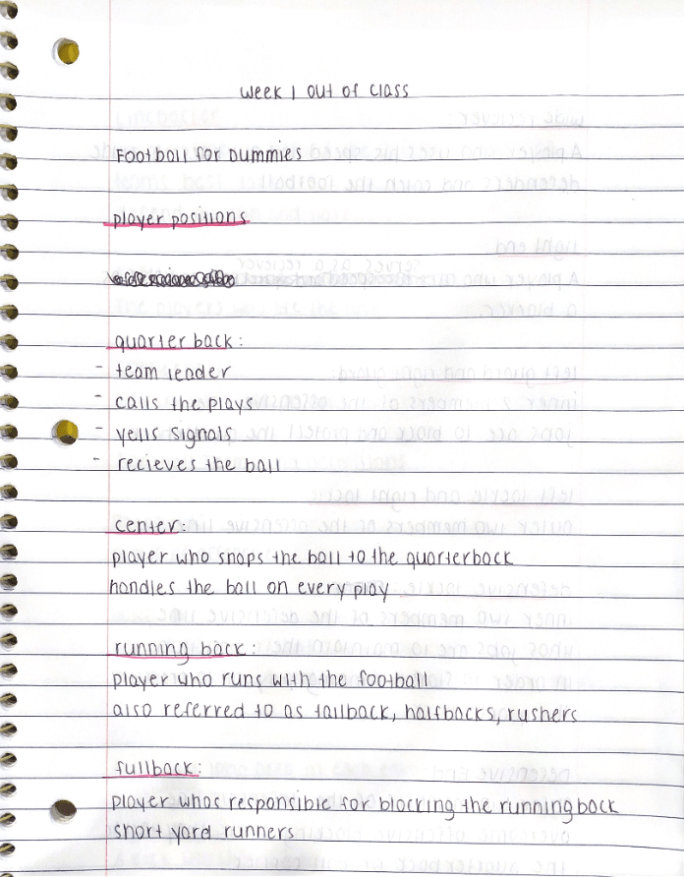
SHAKIR: Different Strategies / Positions
Strategies/positons/schemes
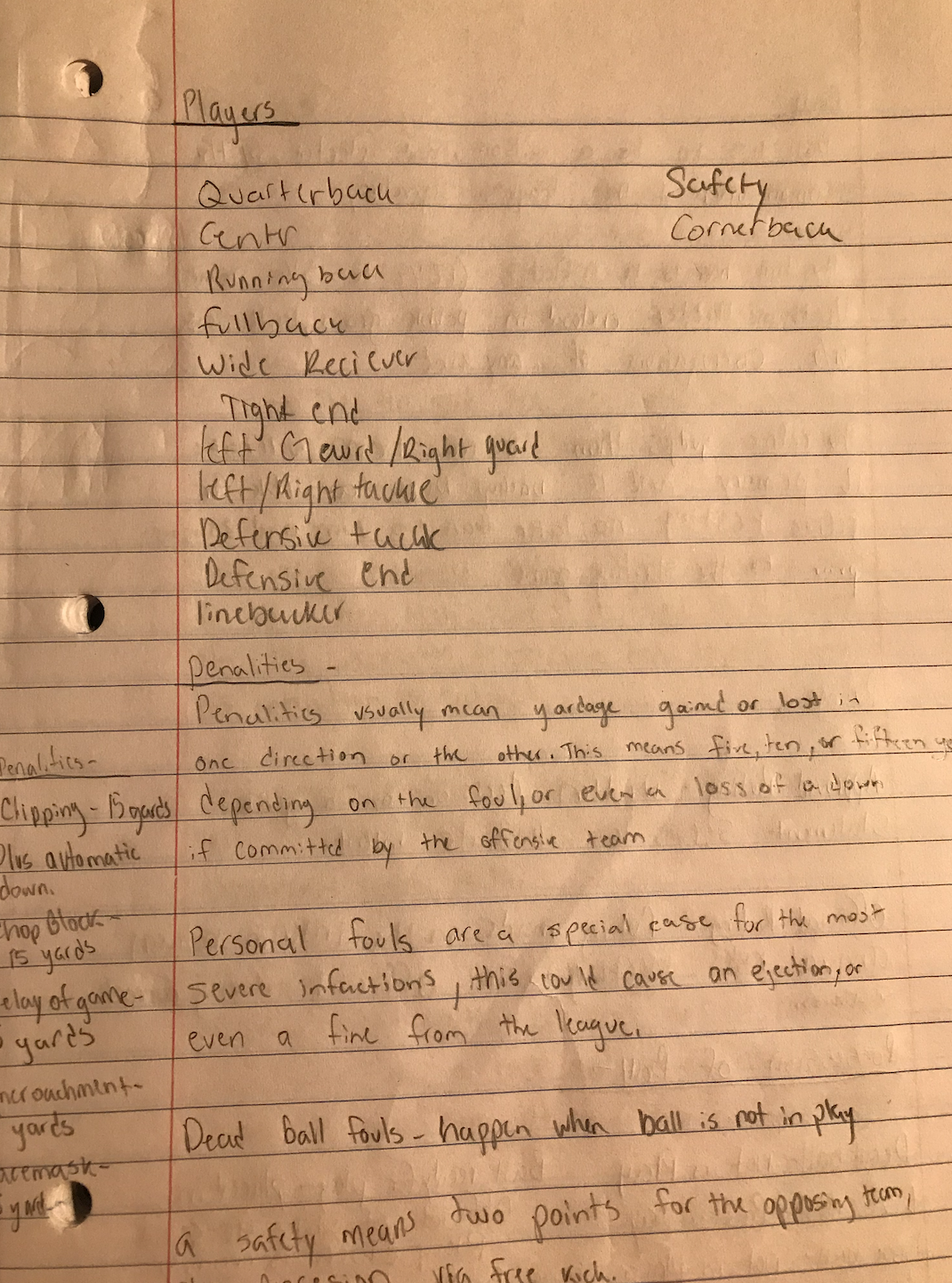
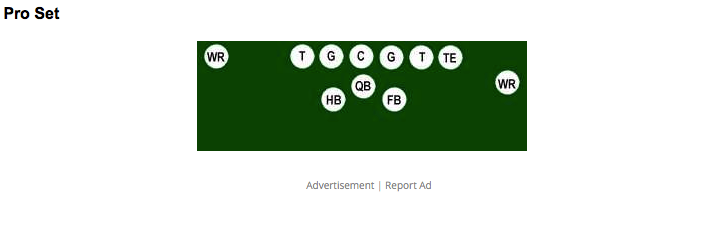
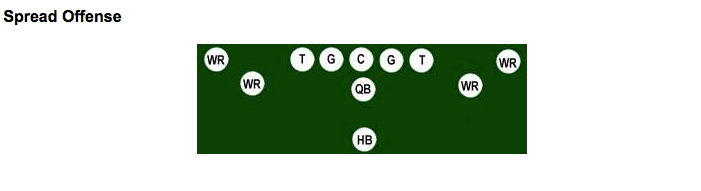
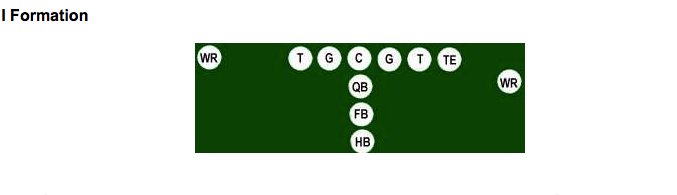
- Quarterback – responsible for reading the play, audible if needed, passing the ball, or handing the ball to the runningback or fullback.
- Runningback-responsible for receiving handoff or catching ball
- Center- responsible for snapping ball to quarterback, block for the quarterback, and help quarterback change the quarterback.
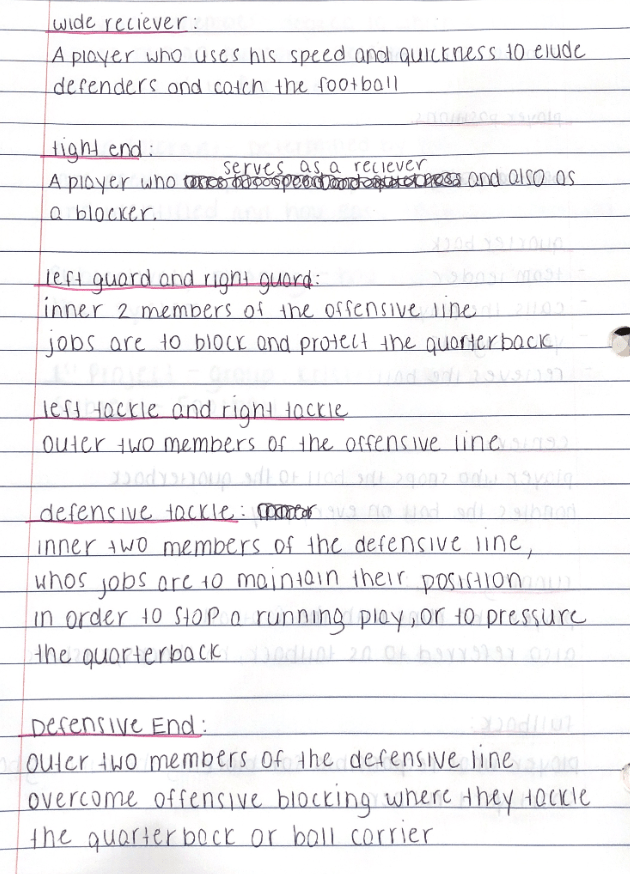
- Right tackle – responsible for blocking the quarterbacks right blind side.
- Left tackle- responsible for blocking the quarterbacks left blindside.
- rightguard- responsible for blocking a defensive lineman coming from the rightside.
- Leftguard- responsible for blocking a defensive lineman coming from the leftside.
- fullback- responsible for running the ball, blocking for quarterback, and blocking for runningback.
- Wide receiver- responsible for catching the ball
- Tightends- responsible for catching ball and blocking
- kicker- responsible for kicking ball through goal post
Defense
- Defensive tackles- responsible for rushing the quarterback through the offensive line and stop the run.
- Defensive ends- responsible for rushing quartback and stop the run.
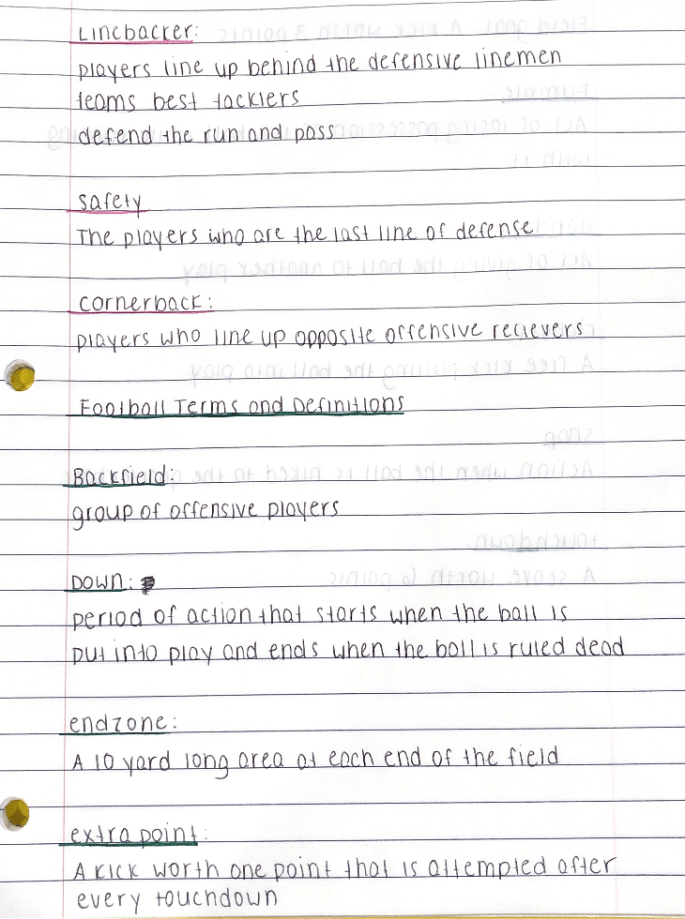
- Middle linebacker- responsible for rushing the quarterback, stop the run, defending passes, and changing play on defense.
- Right outside linebacker- responsible for rushing quarterback, stop the run, and defending passes.
- Left outside linebacker- responsible for rushing quarterback stop the run, and defending passes.
- Safetys- responsible for being the LAST guys to tackle, defend passes, and stop the run.
- cornerback- responsible for defending the receivers, and stopping the run.
- punter- responsible for punting ball away after offense cant or move the ball.
- Kick returner/punt returner- responsible for receiving ball after a punt or a kickoff.
- Long snapper- responsible for snapping ball to kicker/punter.
- holder- responsible for holding ball in order for kicker to kick the ball though the goal post.
Offensive gameplans
- Option offense-Based on a running play, but this gives the quarterback the choice to change it to a pitch to the runingback or he can hold it himself.
- Run and shoot-Based on receiver motion and on the fly adjustments to the receivers routes due to how the defense is set.
- Smashmouth- Based on a offense that relies on a strong running game. Most plays are handoffs to running backs or fullbacks.
- West coast offense-More emphasis or pasing than running
Defensive gameplans
- 46 defense- is where there’s six players at the defensive line or eight men in the box.
- Man to man- defensive players are assigned one player to follow all around the field in coverage or running.
- Tampa 2- Consist of 4 down defensive lineman, three linebackers, 2 cornerbacks, and middle linebacker dropping into a zone or coverage.
- Zone blitz- where there’s more people rushing the quarterback while putting a pass rusher in coverage.
Steph: WAYS TO SCORE / GENERAL RULES
RULES
Goal Posts
- All goal posts throughout the NFL league must be the same size, and the same gold color.
- It will extend 35 feet above the crossbar, and be between 3-4 inches in diameter.
The Ball
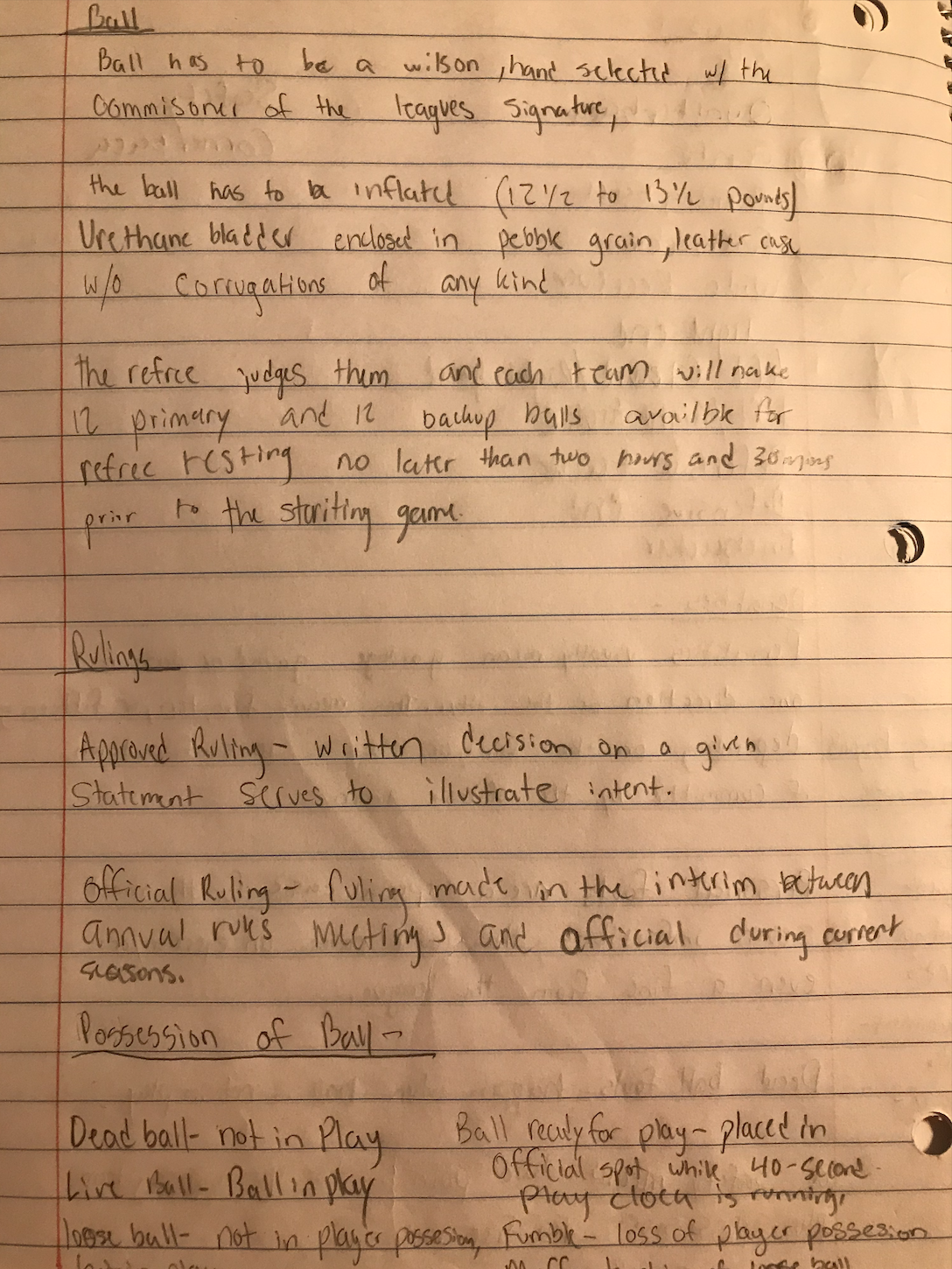
- Must be a Wilson, and must have the signature of the commissioner of the league on it.
- The referee has the supervision of the ball until it is handed over to the ball attendant at the start of the game.
Possession of the Ball During the Game
- Dead Ball
One that is not in play- during all timeouts, including intermission, and from the time the ball becomes dead until it is legally put in play. - Ball Ready for Play
The ball is placed down by an official at the spot where the ball will next be put in play, or when the Referee signals for the play clock to start. - Live Ball
Ball that is currently in play. - Fumble
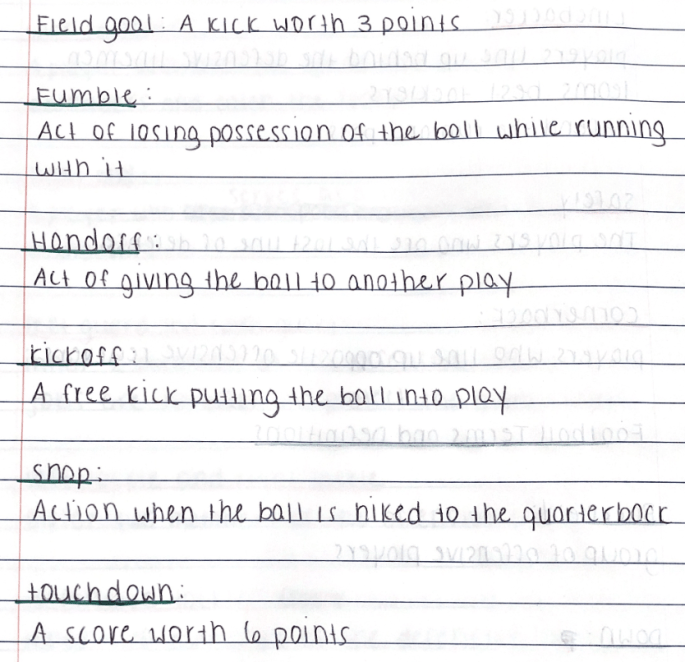
When the player loses possession of the ball.
Player Fouls
- Bat
The intentional striking of the ball with the hand or arm. - Blocking
The act of obstructing an opponent by contacting him with a part of the blockers body. - Clipping
Blocking an opponent from behind below the waist.
Downs
A period of action that starts when the ball is put in play and ends when the ball is declared dead.
Fouls
Any rule that is broken that results in a penalty.
Kicks
- Drop Kick
Kick by a player who drops the ball from the air and kicks it as or immediately as it touches the ground. - Place Kick
A kick made by a player while the ball is in a fixed position on the ground. - Punt
A kick made by a player who drops the ball and kicks it before it hits the ground.
Game Timing
- Length of the Game
Total length is 60 minutes, divided into four periods of 15 minutes each. - Intermissions
Intervals of 2 minutes between the first and second periods, and the third and fourth periods. - Halftime
Intermission of 13 minutes between the second and third periods.
Play is suspended, and both teams leave the field.
The offensive team can lose possession of the football if…
- They score
- They do not get 10 yards in four downs.
- They fumble or drop the football and the defensive team recovers it.
- They throw the football to a defensive player for an interception.
- They punt or kick the football to the defensive team.
- They miss a field goal.
- They get tackled in the end zone.
SCORING
Touchdown: 6 points
- The primary way to score points in football.
- Players score a touchdown when they advance across the other teams goal line in the endzone.
- After a touchdown occurs, the offensive team is also given the opportunity for an extra point or 2 point conversion.
Extra point: 1 point
- Attempted after a touchdown.
- The ball is placed on the 2 yard line (NFL) and the player attempts to kick the ball through the goalpost.
Two point conversion: 2 points
- Attempted after a touchdown.
- The ball is placed on the 2 yard line (NFL), and the team tries to advance to endzone similar to a touchdown.
Field goal: 3 points
- When the player kicks the ball through the goalposts.
Safety: 2 points
- When the defense team tackles an offensive player behind their goal line.
Kristen: Penalties/referee
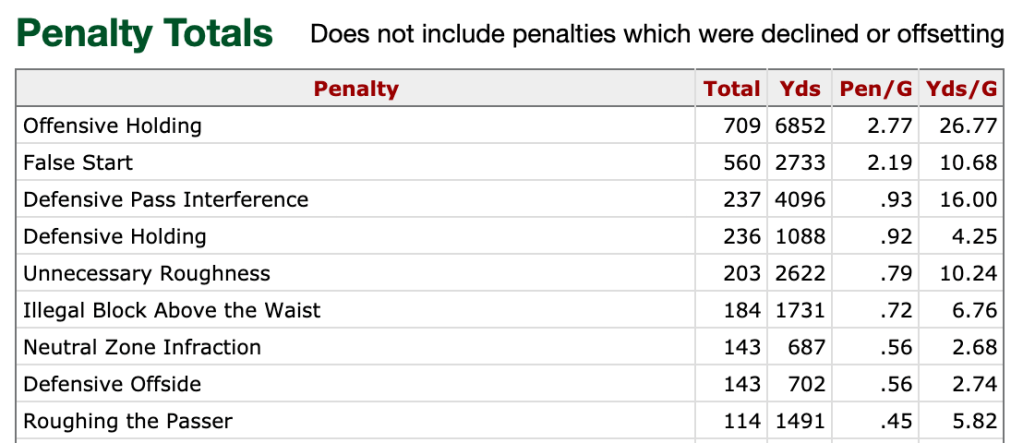
Most Common Penalties
Offensive Holding – When an offensive player uses his hands, arms, or other parts of his body to prevent a defensive player from tackling the ball carrier.
False Start – When an interior lineman on the offensive team moves prior to the snap of the ball, or when any offensive player makes a quick, abrupt movement prior to the snap of the ball.
Pass Interface – A judgment call made by an official who sees a defensive player makes contact with the intended receiver before the ball arrives, thus restricting his opportunity to catch a forward pass.
Defensive holding- When a defensive player tackles or holds an offensive player other than the ball carrier.
Unnecessary Roughness – If a player uses any part of his helmet (including the top/crown and forehead/”hairline” parts) or facemask to butt, spear, or ram an opponent violently or unnecessarily.Offensive Holding – When an offensive player uses his hands, arms, or other parts of his body to prevent a defensive player from tackling the ball carrier.
Illegal Block Above the Waist – Often called on the field as “Illegal Block in the Back”. A blocker contacting a non-ball carrying member of the opposing team from behind and above the waist.
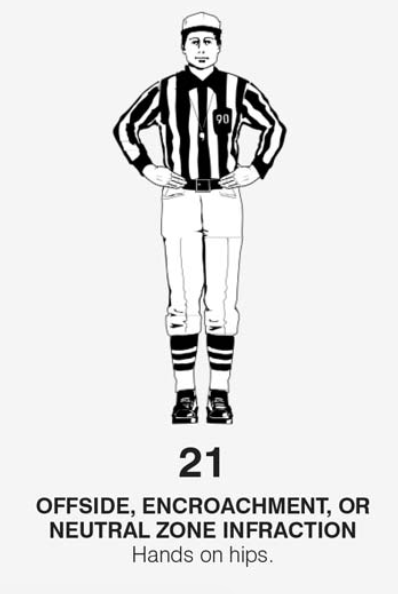
Neutral zone infraction – Multiple ways
- a defender moves beyond the neutral zone prior to the snap and is parallel to or beyond an offensive lineman, with an unimpeded path to the quarterback or kicker, even though no contact is made by a blocker.
- a defender enters the neutral zone prior to the snap, causing the offensive player(s) in close proximity to react immediately to protect himself against impending contact; officials are to blow their whistles immediately.
- a player, after he has received a warning, enters into the neutral zone. It is a foul, even if he returns to a legal position prior to the snap without contacting an opponent or causing a reaction (movement) by an offensive player in close proximity.
Offside – When any part of a player’s body is beyond the line of scrimmage or free kick line when the ball is put into play.
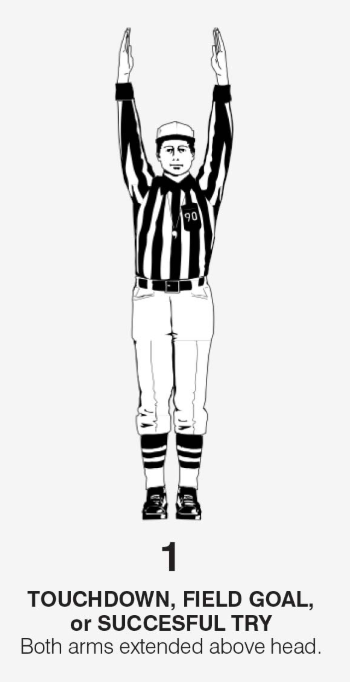
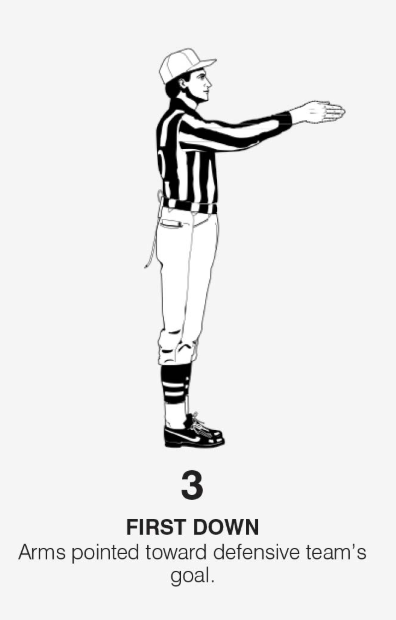
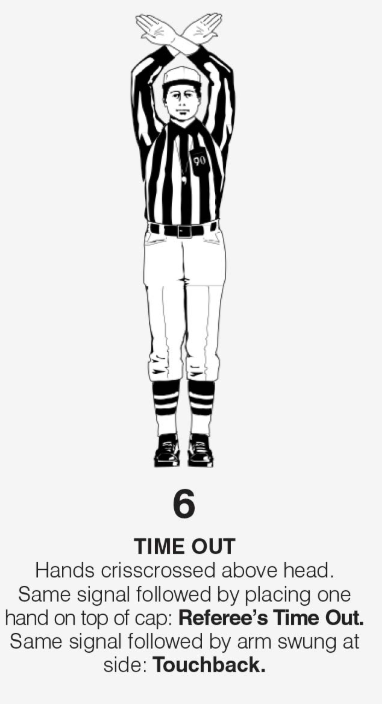
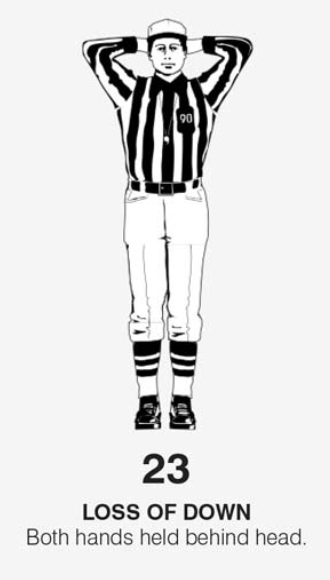
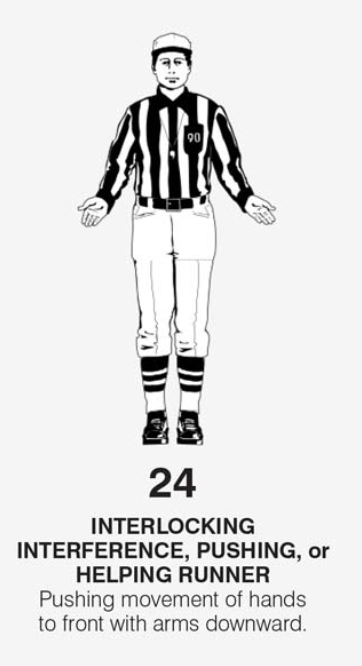
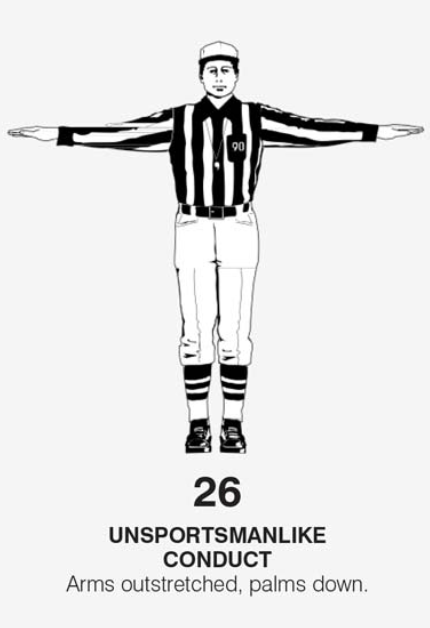
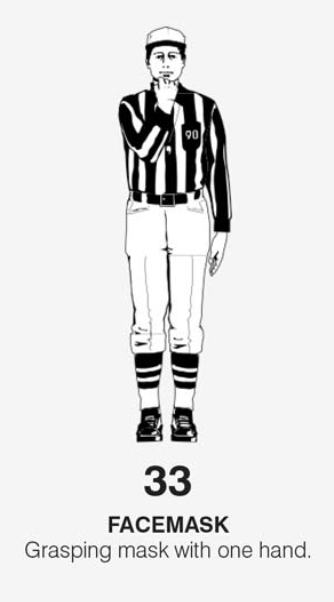
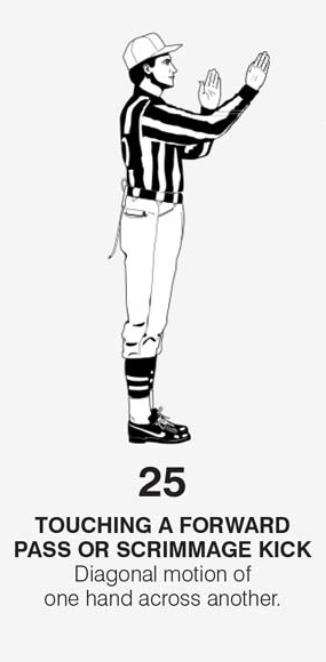
Referee Signals
Questions for the Interview
What penalties do you see the most?
Do you ever have to watch out for penalties?
Whats a day of coaching a game look like for you?
What is the purpose of the hash marks?
What is one thing about football people don’t usually understand?
How do you prep your players for game day?
What are the average amount of touchdowns you normally see per game?
Do your games often go into overtime?
Resources Used:
https://operations.nfl.com/the-rules/2019-nfl-rulebook/
https://www.pro-football-reference.com/years/2018/penalties.html
https://www.dummies.com/sports/football/common-penalties-in-american-football/
https://www.ducksters.com/sports/football/scoring.php
https://en.wikipedia.org/wiki/American_football_strategy#Defensive_strategy
https://howtheyplay.com/team-sports/Offensive-and-Defensive-Football-Positions-Explained


 Football Experience Design